
Room Acoustics
The room is part of your sound system.
No two listening rooms behave exactly alike.
The dimensions and shape of the room, its construction, doors and windows, floor and ceiling surfaces, furnishings, speaker placement and listening position all influence how sound behaves within it. Even two rooms of similar size can require very different treatment.
Low frequencies are particularly affected by the dimensions of a room. Reflections between surfaces can reinforce some frequencies while cancelling others, producing peaks and dips in the bass response. The result may be heavy, boomy bass in one listening position and surprisingly weak bass only a short distance away.
At higher frequencies, strong early reflections from walls, floors and ceilings can interfere with the direct sound from the speakers. This can reduce clarity, blur detail and make the stereo image less precise.
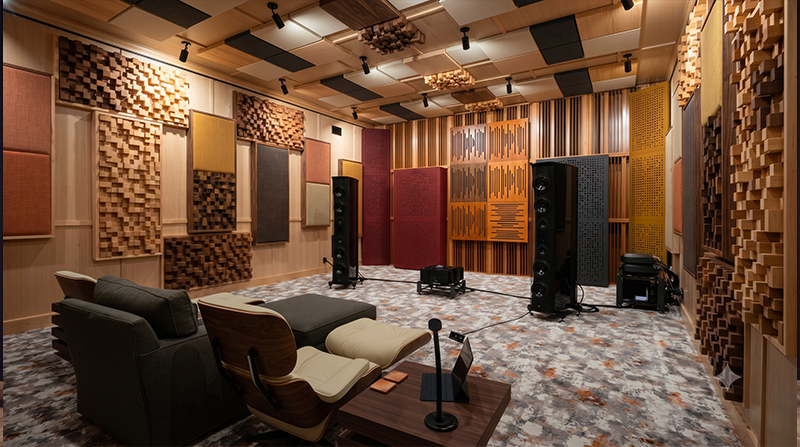
THE ROOM CHANGES EVERYTHING
Even the finest loudspeakers don't perform in isolation. The moment sound leaves a speaker, it begins interacting with the room - reflecting from walls, floors, ceilings, furniture and virtually every surface around it.
What reaches your ears is therefore a combination of the direct sound from the speakers and reflections arriving fractions of a second later. Those reflections can reinforce some frequencies, reduce others and affect clarity, imaging and tonal balance.
A room with large hard surfaces may sound bright, harsh or excessively lively, while furnishings, curtains, carpets and other softer surfaces absorb and diffuse sound differently.
The goal of good room acoustics is not to eliminate reflections or make the room completely dead. It is to control how the room interacts with the system, creating the right balance between direct and reflected sound.
The first step isn't to start covering walls with acoustic panels.
It is to understand what the room is actually doing to the sound.

A properly considered solution may combine speaker and listening-position placement, along with utilization of absorption panels, skyline diffusors, quadratic diffusers, helmholtz resonators, diaphragmatic absorbers which is solely based on rooms requirement. Each has a different role, and the best results usually come from using them together in the right proportions.
Absorption helps control excessive reflections and reverberation. Diffusion redistributes reflected energy rather than simply removing it, helping a room retain a sense of openness and space. Bass treatment addresses troublesome low-frequency behaviour, while careful positioning can sometimes correct significant problems before any physical treatment is added at all.
The objective is not maximum treatment. It is the right treatment in the right places.
The aim isn't to make every room acoustically identical.
Let the system perform naturally within the room you actually live in.